대구 서문시장 — 내가 좋아하는 한국 시장 먹거리
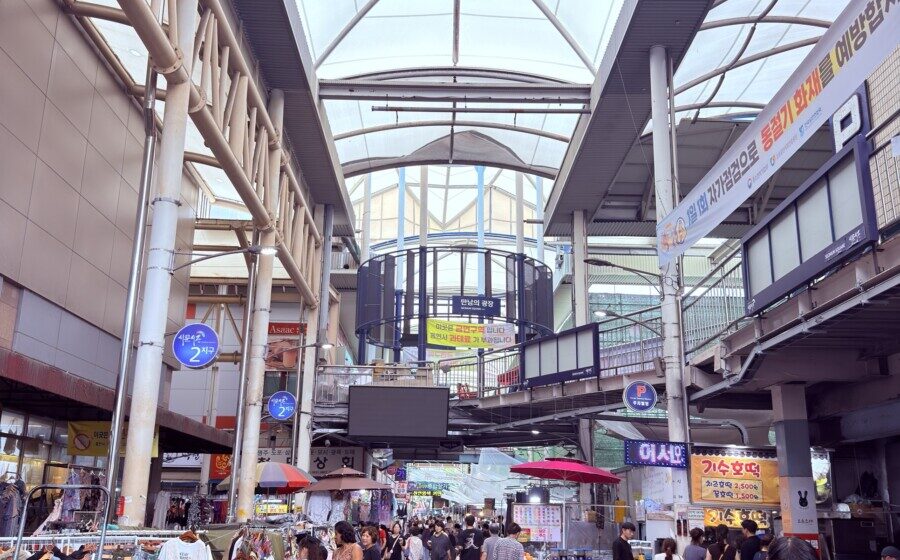
This is Seomun Market in Daegu.
It’s one of the larger traditional markets outside Seoul, and it’s a place I visit from time to time. I don’t come here looking for anything fancy. I come to walk around, look at the stalls, and most importantly, eat.
Because really, isn’t food one of the best parts of going to a traditional market in Korea?
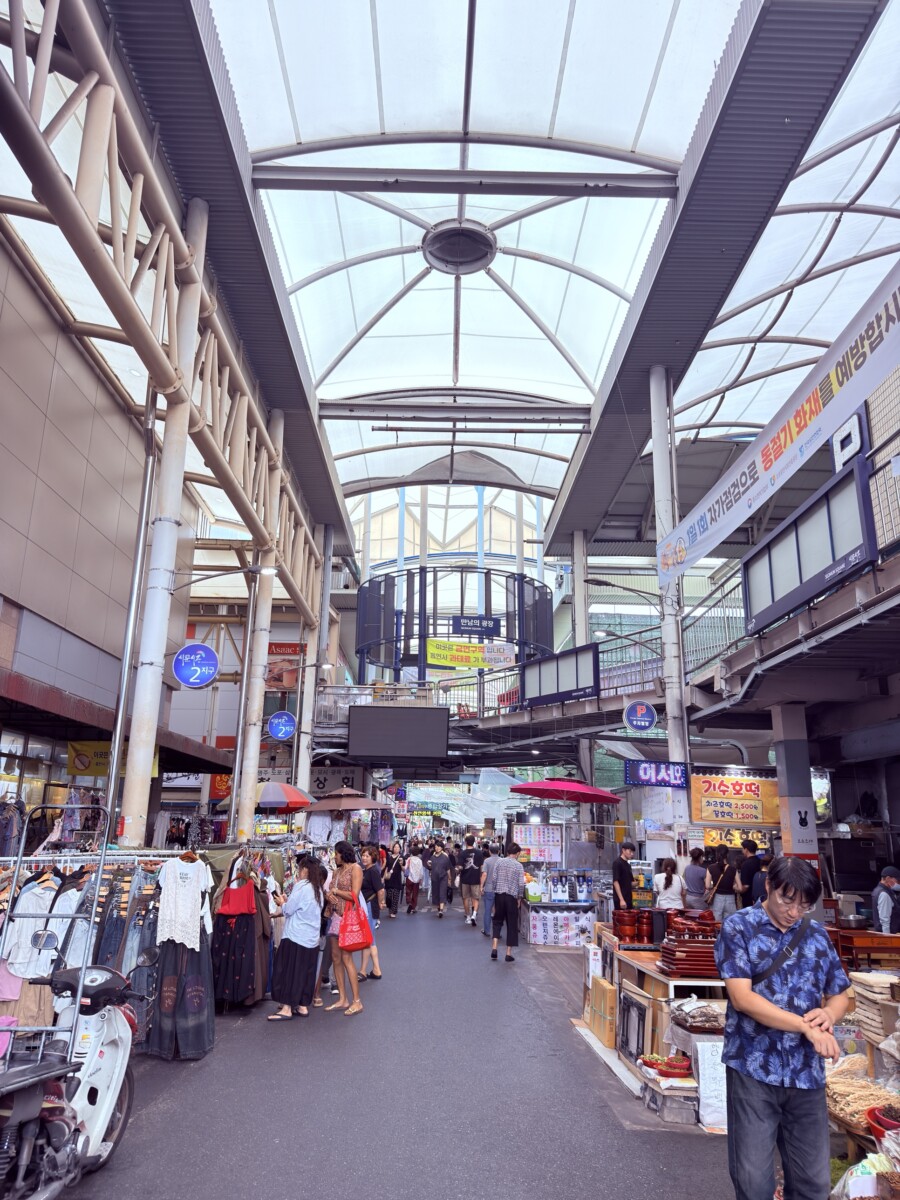
이곳은 대구의 서문시장이다.
서울이 아닌 지역에 있는 전통시장 중 규모가 큰 편이고, 나도 가끔 찾는 곳이다. 뭔가 특별히 근사한 것을 찾으러 간다기보다는 시장을 돌아다니며 구경하고, 무엇보다 먹으러 간다.
사실 한국 전통시장의 묘미는 먹거리 아니겠어? ㅎㅎ
My Favorite Stop: Fish Cake
내가 좋아하는 곳, 어묵집
One of my favorite things to eat here is eomuk (어묵), Korean fish cake.
At this particular stall, there are different flavors, from mild to slightly spicy and spicy. You can usually tell which ones are spicy by the red sauce.
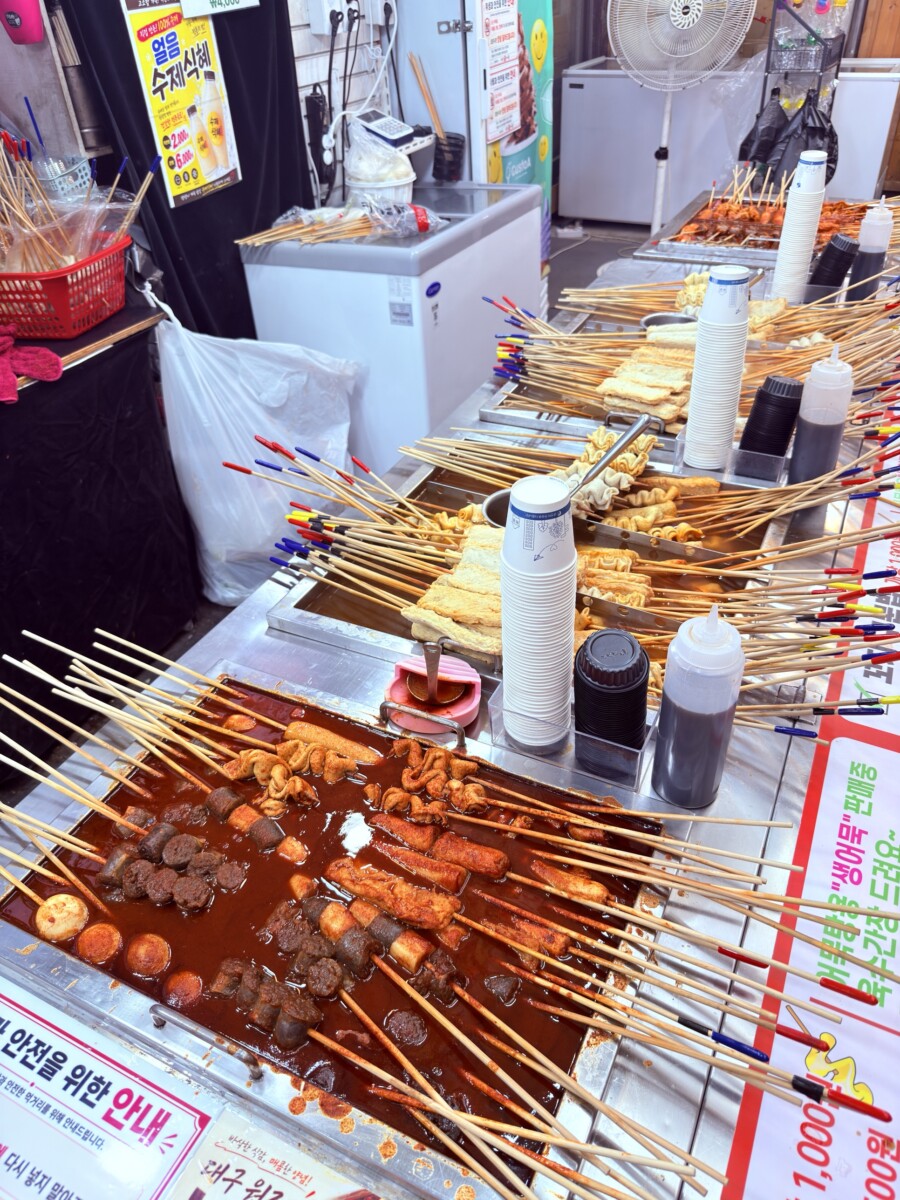
I especially love eating this when the weather gets cold.
You pick a fish cake skewer, eat it while standing there, and have some of the hot broth with it.
On a chilly day, that combination makes me ridiculously happy.
Nothing complicated. Just hot fish cake and warm broth in the middle of a busy market.
But that’s exactly why I like it.
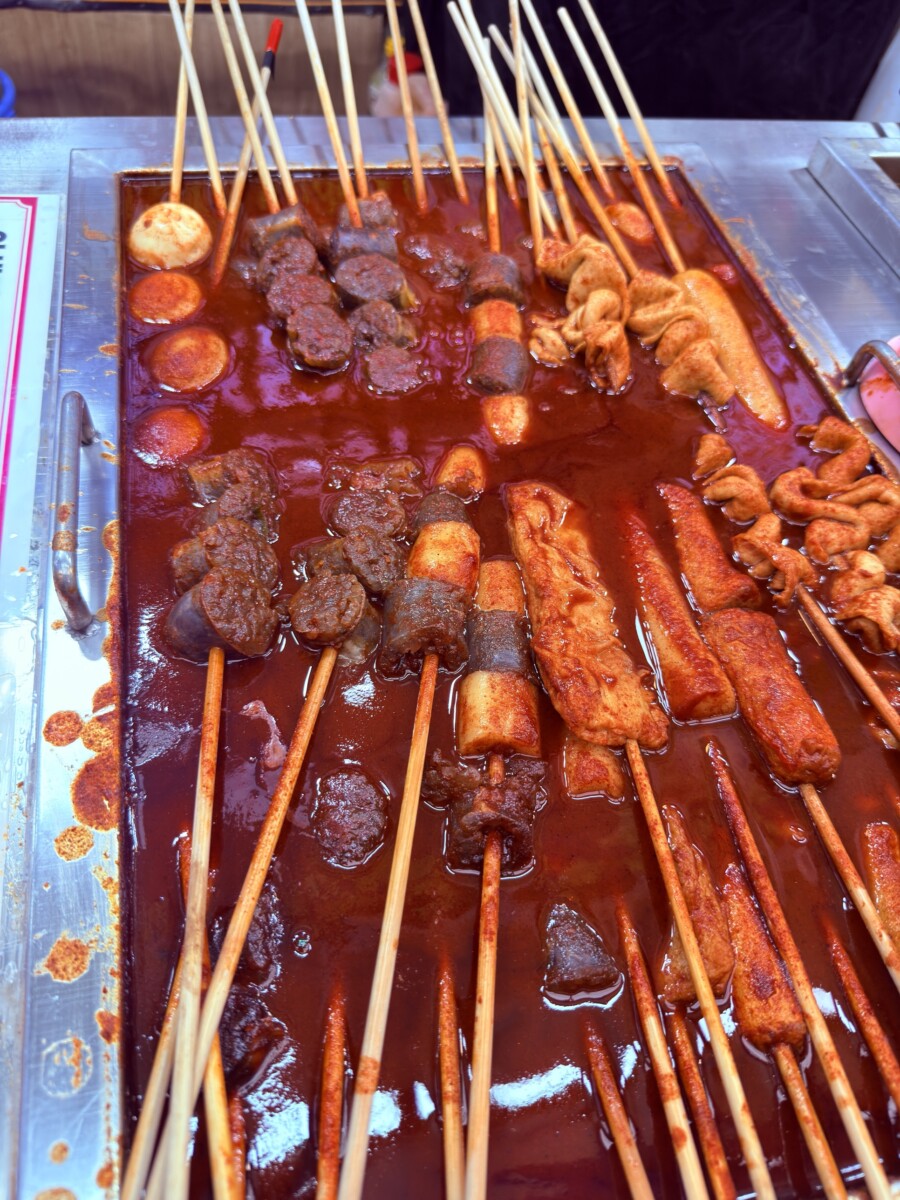
내가 여기서 특히 좋아하는 것 중 하나가 어묵이다.
이 어묵집에는 순한맛부터 약간 매콤한 맛, 매운맛까지 있는데 빨갛게 양념된 것들이 특히 맵다.
나는 날씨가 쌀쌀해지면 여기서 어묵 먹는 걸 정말 좋아한다.
꼬치 하나 골라서 서서 먹고 따끈한 어묵 국물까지 마시면 기분이 정말 좋아진다.
별것 아닌 것 같은데, 북적거리는 시장 한가운데서 먹는 따뜻한 어묵과 국물. 나는 바로 이런 게 좋다.
Eomuk or “Odeng”?
어묵? 오뎅?
You may also hear Koreans call fish cake “odeng” (오뎅) in everyday conversation.
People around here still use the word quite casually, and I sometimes say it too out of habit.
The word came into Korean through Japanese during a complicated period in Korean history, including the years of Japanese colonial rule.
So for this post, I’ll call it by the Korean word: eomuk (어묵).
If you hear someone at a market say, “Odeng juseyo” (오뎅 주세요), though, now you’ll know what they’re asking for. 🙂
한국에서는 일상적으로 어묵을 ‘오뎅’이라고 부르는 사람들도 많다. 특히 이 지역에서는 자연스럽게 그렇게 말하는 경우가 많고, 사실 나도 습관적으로 그렇게 부를 때가 있다.
이 표현이 한국에 자리 잡은 데에는 일제강점기를 포함한 한국과 일본 사이의 복잡한 역사적 배경도 있다.
그러니 이 글에서는 한국어인 ‘어묵’이라고 부르도록 해야겠다.
그래도 시장에서 누군가 “오뎅 주세요”라고 말하는 걸 듣는다면 이제 무슨 말인지 알 수 있을 거다. 🙂
Peanut Bread and Old-Fashioned Egg Cake
땅콩빵과 옛날 계란빵 같은 카스테라
There’s also a popular place here selling peanut bread and castella-style cakes.
The castella here reminds me of old-fashioned Korean egg bread. It has that sweet, eggy flavor that feels a little nostalgic.
It’s the kind of snack I like to buy while walking around the market.
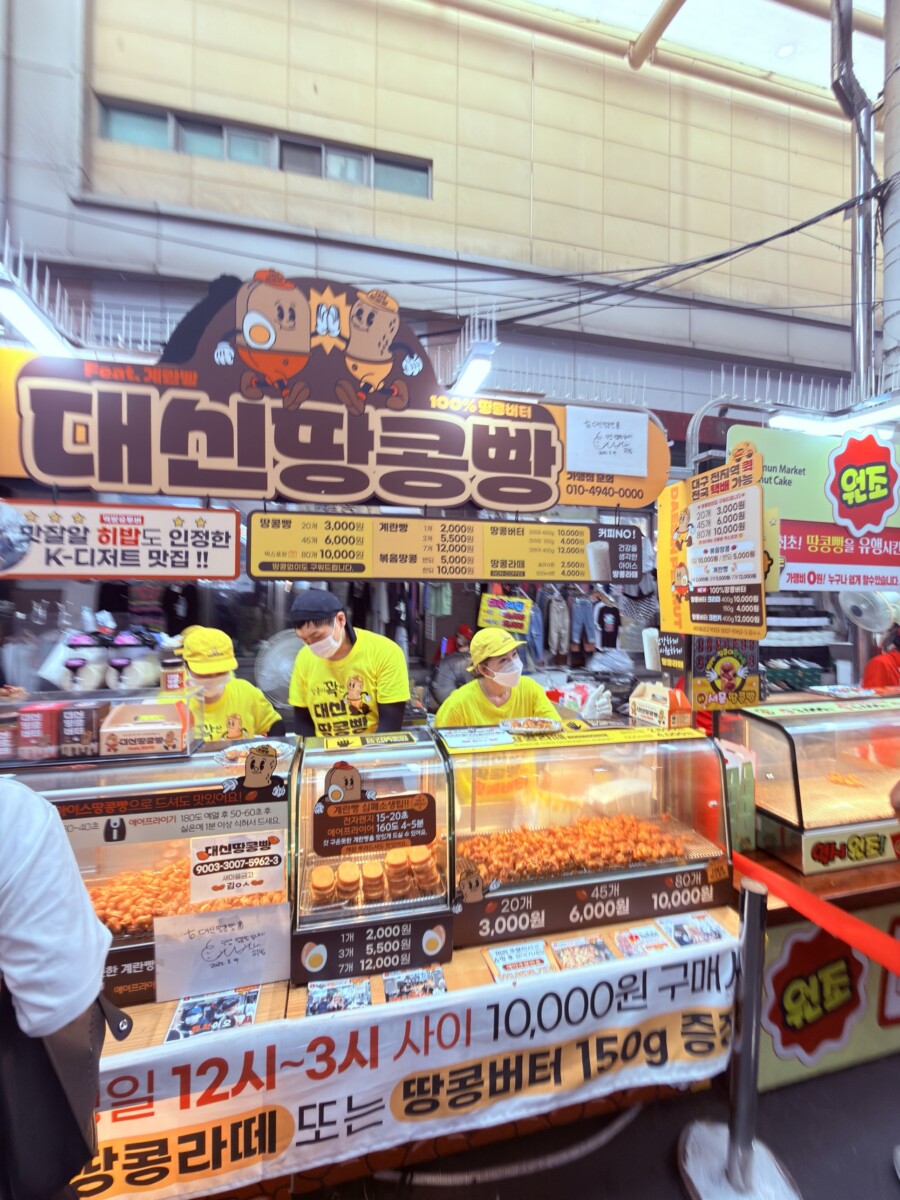
여기에는 땅콩빵과 카스테라빵으로 유명한 곳도 있다.
특히 카스테라는 내가 먹어보면 옛날 계란빵 같은 맛이 난다. 달달하면서 계란 맛이 나는, 조금은 추억의 간식 같은 맛이다.
시장 구경하면서 하나 사 먹기 좋다.
Spicy Fish Cake with Bean Sprouts and Dumplings
양념어묵과 만두
There’s another market food I like here: spicy seasoned fish cake.
It’s made with plenty of bean sprouts and spicy seasoning, and I like eating it together with dumplings.
This is exactly the kind of food that makes me think of a Korean traditional market.
Unfortunately, I visited on a warmer day this time, so I didn’t take photos of it.
Next time. 🙂
이번에는 사진이 없지만 서문시장에는 내가 좋아하는 양념어묵도 있다.
콩나물을 듬뿍 넣고 매콤하게 만든 양념어묵을 만두와 같이 먹으면 맛있다.
이런 게 정말 시장표 음식이지.
이번에는 조금 더운 날 가서 사진을 안 찍었는데 다음에 가면 꼭 찍어와야겠다. ㅎㅎ
And I Still Have to Eat Kalguksu + Sujebi
다음엔 칼제비 먹으러
Another thing I like at Seomun Market is kaljebi (칼제비).
Kaljebi combines kalguksu, Korean knife-cut noodles, with sujebi, hand-torn dough pieces, in a hot broth.
It’s simple, filling Korean comfort food.
I didn’t eat it on this visit, but next time I go to Seomun Market, that’s what I’m getting.
Fish cake first, maybe some peanut bread, spicy fish cake and dumplings… and then kaljebi.
Yes, apparently I go to the market to eat. 😂
서문시장에서는 칼제비도 맛있다.
칼국수의 면과 수제비를 함께 넣어 끓여 먹는 음식인데, 따끈하고 든든한 한국식 시장 음식이다.
이번에는 못 먹었지만 다음에 서문시장에 가면 나는 칼제비를 먹고 올 생각이다.
어묵 하나 먹고, 땅콩빵도 사고, 양념어묵에 만두도 먹고… 마지막에 칼제비까지.
그래. 아무래도 나는 시장에 먹으러 가는 것 같다. 😂
Seomun Market Night Market
서문시장 야시장
And Seomun Market has another side to it at night.
At certain times of the year, a night market operates here, with food stalls lining the street.
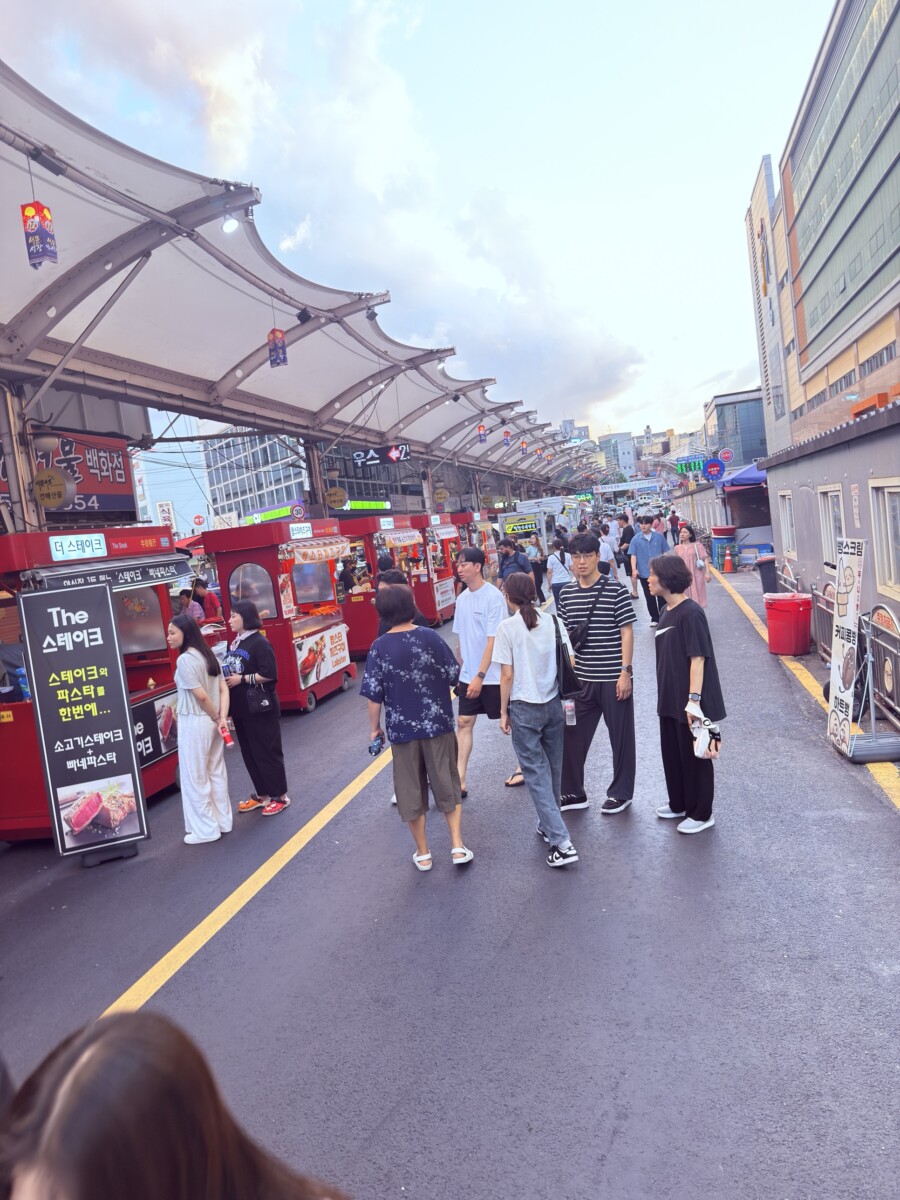
The atmosphere is completely different from the daytime market.
There are people walking everywhere, red food stalls lined up along the street, and vendors cooking right in front of you.
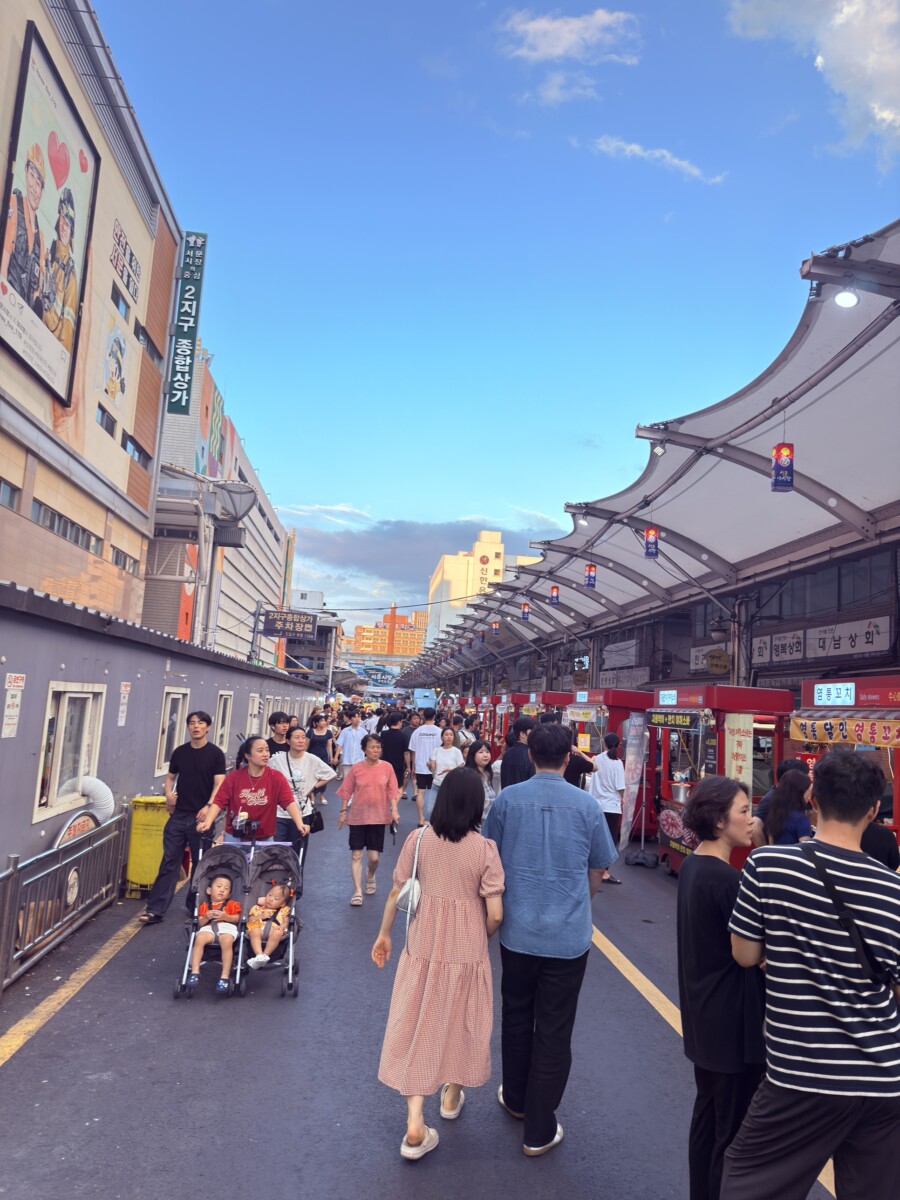
You’ll find all kinds of food—grilled skewers, meat, noodles, spicy dishes, and plenty of things that are easy to eat while walking around.
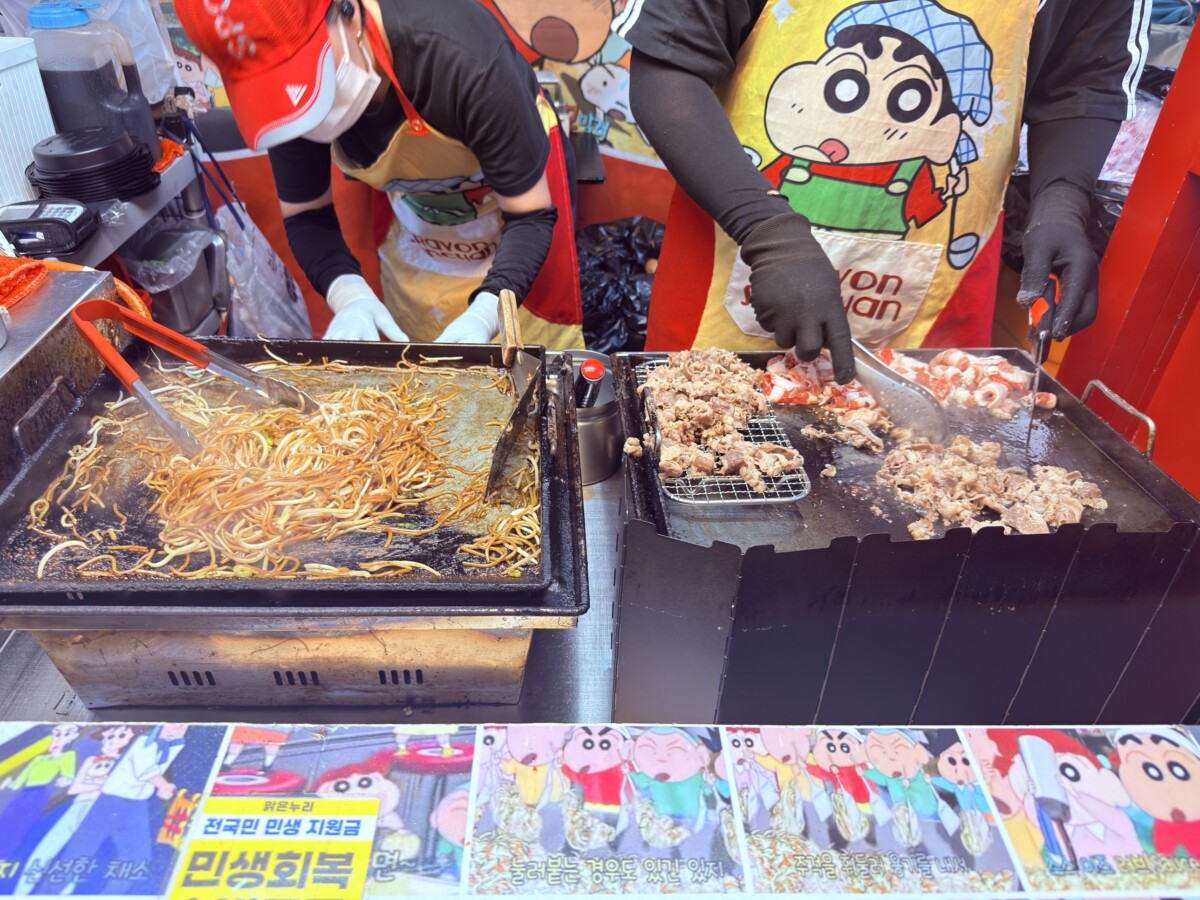
Honestly, half the fun is just looking.
You walk past one stall…
“That looks good.”
Then another one…
“Oh, that looks good too.”
And suddenly you’re eating again. 😂
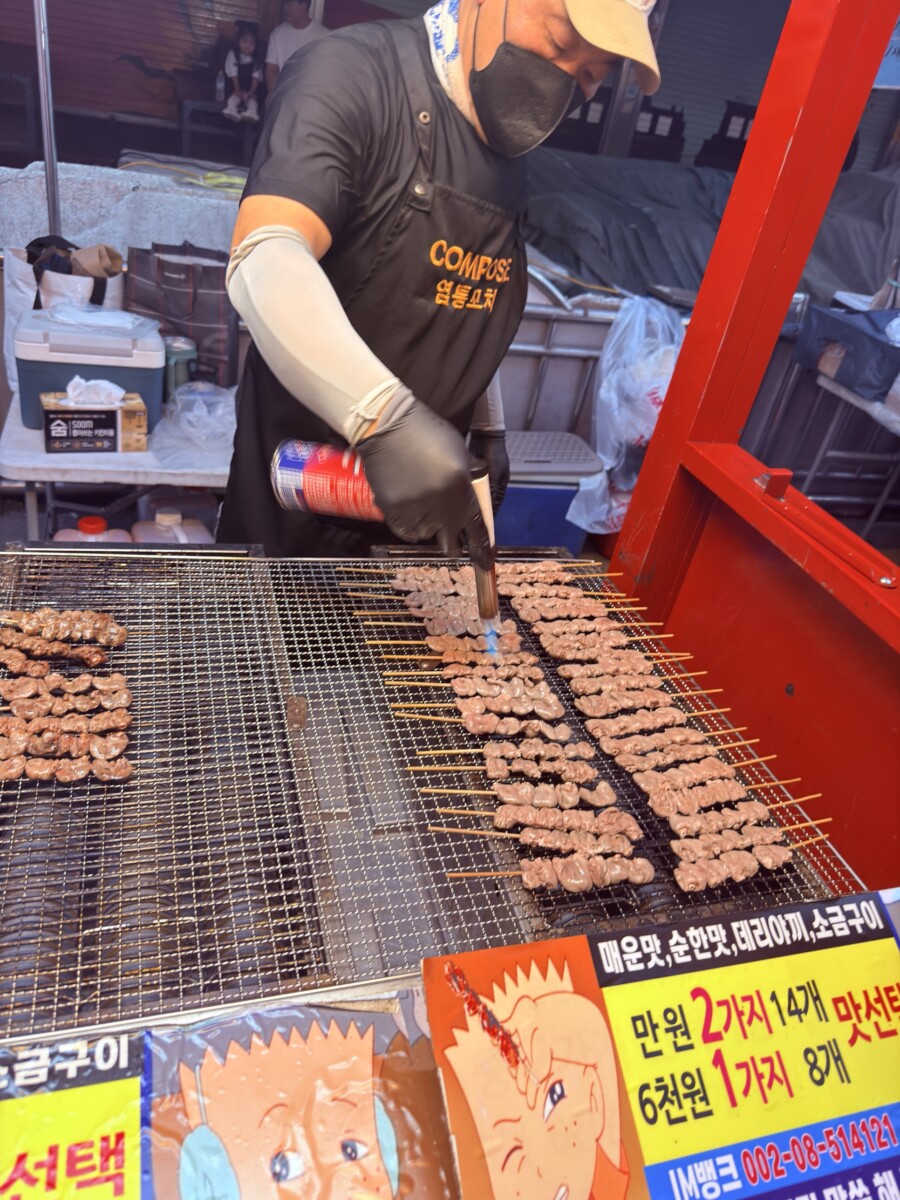
I particularly like the foods that are cooked right in front of you.
There’s something about the smell, the sound of food sizzling on the grill, and everyone standing around deciding what to eat next that makes a night market fun.
The night market doesn’t necessarily operate the same way throughout the year, so if this is something you specifically want to experience, check the current schedule before visiting.
But if it happens to be running while you’re in Daegu, I think it’s worth coming back to Seomun Market in the evening.
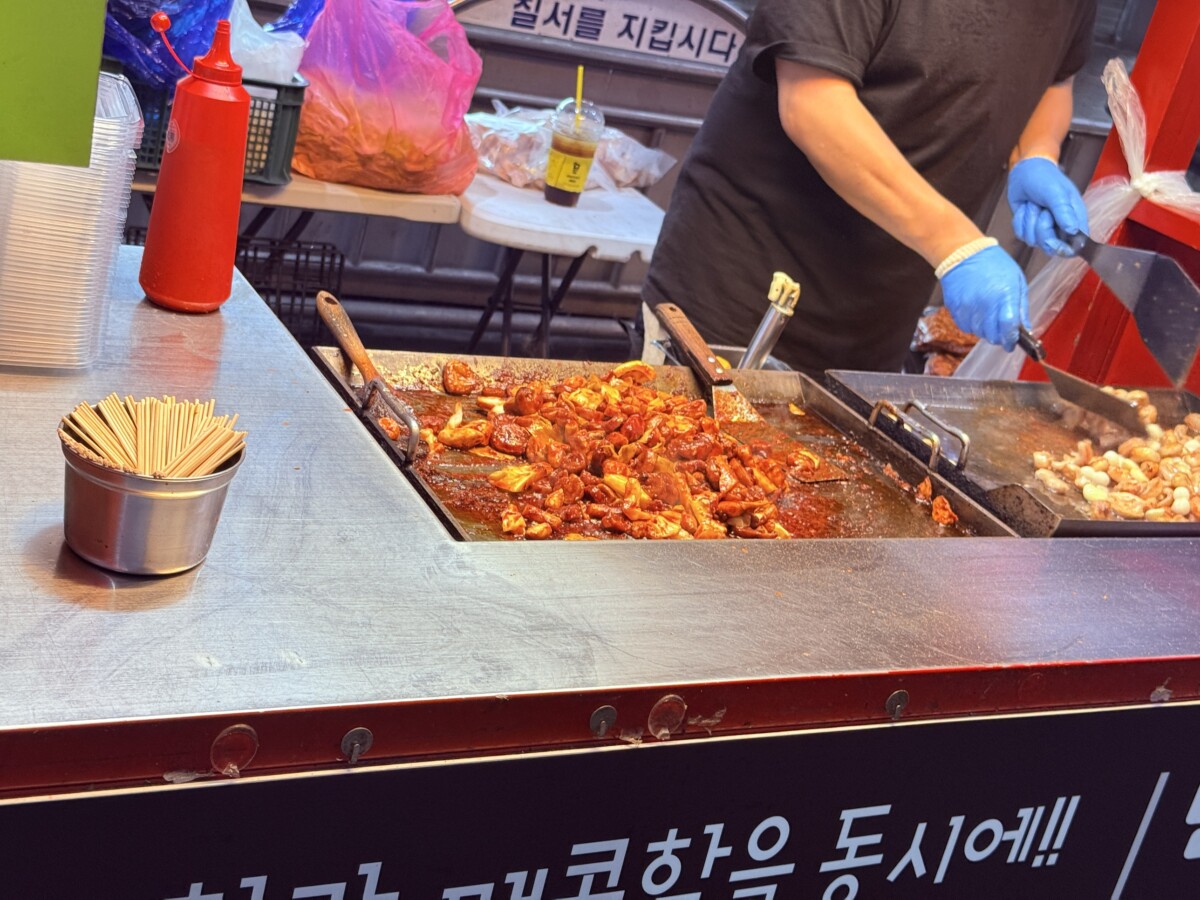
그리고 서문시장은 밤이 되면 또 다른 모습이 있다.
특정 시기에는 야시장이 열리는데 길을 따라 푸드 부스들이 늘어선다.
낮에 보는 서문시장과는 분위기가 꽤 다르다.
사람들이 북적이고 빨간 푸드 부스가 쭉 늘어서 있고, 눈앞에서 바로 여러 음식을 만들어준다.
꼬치구이, 고기, 면 요리, 매콤한 음식 등 걸어 다니면서 먹기 좋은 음식들이 많다.
사실 나는 야시장에서는 먹는 것도 먹는 거지만 구경하는 재미가 크다.
하나 지나가면서
“어? 저거 맛있겠다.”
또 지나가면서
“이것도 맛있겠는데?”
그러다 보면 또 뭔가를 먹고 있다. 😂
특히 눈앞에서 바로 굽고 볶아주는 음식들이 좋다. 지글지글 익는 소리와 냄새, 뭘 먹을지 고르는 사람들까지 합쳐져서 야시장 특유의 분위기가 생긴다.
야시장은 연중 항상 같은 방식으로 운영되는 것은 아니기 때문에 야시장을 목적으로 방문한다면 방문 전에 현재 운영 일정을 확인하는 것을 추천한다.
여행 중 마침 야시장이 열리고 있다면 저녁에 다시 한번 들러봐도 좋다.
Is Seomun Market Worth Visiting?
서문시장, 가볼 만할까?
For me, yes.
But keep in mind that this is a traditional market, not a perfectly polished shopping mall.
If you expect everything to be spotless and perfectly organized, it might not be your style.
I don’t like dirty places either, but I still come here from time to time because I enjoy the food and the atmosphere.
It feels local, busy, imperfect, and alive.
That’s part of the experience.
Seomun Market is also a fairly large regional market, so if you’re traveling around Daegu, I think it’s worth visiting at least once.
And compared with some of the famous places in Seoul, it can feel a little less overwhelming—which I personally like. 🙂
요약하면 나는 가볼 만하다고 생각한다.
다만 이곳은 깔끔하게 정돈된 쇼핑몰이 아니라 전통시장이다.
모든 것이 티 없이 깨끗하고 완벽하게 정돈된 장소를 원하는 사람이라면 취향에 맞지 않을 수도 있다.
나 역시 지저분한 곳을 좋아하는 사람은 아니지만, 그래도 음식과 시장 분위기가 좋아서 종종 온다.
조금 정신없고, 완벽하지 않고, 사람 사는 느낌이 난다.
그것도 시장을 경험하는 재미 중 하나라고 생각한다.
서문시장은 지방에서는 규모가 꽤 큰 시장이라 대구를 여행한다면 한 번쯤 들러봐도 좋다.
서울의 유명 관광지들에 비하면 조금 덜 복잡하게 느껴지는 것도 나는 좋다. 🙂
One Small Tip for Foreign Visitors
외국인 여행자를 위한 작은 팁
Most signs and menus here are written in Korean, including prices and descriptions of the food.
But these days, translation apps and AI camera translation make things much easier.
So even if you can’t read Korean, don’t let that stop you from exploring.
Look around, translate what you need, point at something that looks delicious, and try it.
That might actually be one of the most fun ways to experience a Korean market.
Next time I come back, I’m getting that kaljebi.
And probably fish cake again.
Actually, definitely fish cake. 🙂
사진을 보면 알겠지만 가격이나 음식 설명은 대부분 한국어로 적혀 있다.
하지만 요즘은 번역 앱이나 AI 카메라 번역이 워낙 잘돼 있어서 한국어를 몰라도 예전보다 훨씬 어렵지 않다.
한국어를 못 읽는다고 시장 구경을 포기할 필요는 없다.
둘러보고, 필요한 건 번역해보고, 맛있어 보이는 걸 가리켜서 주문해보는 것도 한국 시장을 경험하는 재미라고 생각한다.
나는 다음에 다시 가면 칼제비를 먹고 올 거다.
그리고 아마 어묵도 또 먹겠지.
아니, 어묵은 무조건 먹을 것 같다. ㅎㅎ